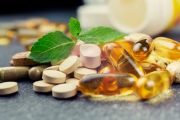
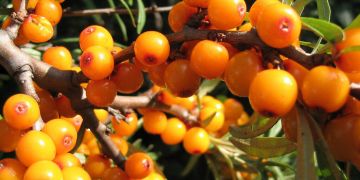
The leaves, flowers, fruits and oils from the seeds are all used for remedies.
About The Plant
There are seven varieties of the Sea Buckthorn, the most common of which are the Hippophae rhamnoides (common sea buckthorn), and the Hippophae salicifolia (willow-leaved sea buckthorn)The others not so common species are Hippophae goniocarpa, Hippophae gyantsensis, Hippophae litangensis,Hippophae neurocarpa and Hippophae tibetana.
Most of the world's sea buckthorn plantations are located in China. There, the shrub is used for soil and water conservation in addition to its healing properties. The fruit of the Sea Buckthorn is difficult to harvest, due to the thorny nature of the shrubs themselves. The harvested fruit is quite acidic and its juices are often combined with those of sweeter fruits, such as grape or pear, to make it more palatable.
Uses
Lowers blood pressure
In natural medicine, there are many uses and indications for the Sea Buckthorn. Leaves and flowers are utilized for arthritis, GI ulcers, gout and skin rashes and irritations. Tea made from the leaves contains vitamins and minerals, antioxidants, amino acids, and fatty acids. The tea is typically used for lowering blood pressure and serum cholesterol, prevention and treatment of diseases of the blood vessel, and for increasing immunity.
Cardiovascular benefits
Buckthorn is a supplemental source of vitamins C, A, and E, beta-carotene, minerals, amino acids, and fatty acids. One recent study suggests that Sea Buckthorn seed oil may be effective for assisting in weight loss. Chinese researchers have completed a study suggesting that Sea Buckthorn oil extract can lower cholesterol, reduce angina and improve heart function in patients with cardiac disease. Research on Sea Buckthorn as it relates to weight loss, cardiac disease and cholesterol levels are ongoing and appear to be promising based on initial results.
Soothes skin and improves sight
Sea buckthorn berries are used for preventing skin infections, improving sight, and slowing the aging process. The tea is commonly applied to sunburns to reduce swelling and irritation while promoting healing.
Additional uses
Seed or berry oil is used for asthma, angina, hyperlipidemia (high cholesterol), as an antioxidant and as an expectorant. Sea Buckthorn oil is used in traditional medicine to slow the reduction of mental agility associated with aging and to reduce the side effects of cancer and cancer treatments. It may be used to treat human gastrointestinal tract (GI tract) diseases including ulcers, GERD, upset stomach, dyspepsia and constipation.